Thursday, 14 February 2013

Glovers Court - updated 2020.

Glover's Court Preston...


This space was the yard joining the Lambert Brother's Printing company (closed for many years) and by spring a welcome splash of colour. Nature comes back but it wasn't going to be long: heads it's flats / tails, a car park - boom!


Not far away from here are many uncertain spaces on and around Church Street and close to Preston Bus Station. Upon first writing this the famous Brutalist structure was under discussion and for most admirers it was a jaw dropping shock what the council and developers had in mind. On the plus side the Tithebarn Project was doomed when John Lewis pulled out and since then the megalithic building has attained a Grade II listing from English Heritage - it's been tarted up and has had the 'aprons' pedestrianised. Writing this in 2020, I think they've done a great job.


Wednesday, 1 February 2012

CHURCH STREET 2012
CHURCH STREET c.1990s

A look down Church Street, Preston

Sometimes you have to work from memory alone. From what I remember of Church St in Preston in the early 1980s was that it was very run down. There was a second hand music shop (which I bought a bass guitar from to start a punk band!); a pet shop (when this closed down in '83, the Youth Opportunity Programme - YOPs, which included myself, took 2-3wks painting it.) There was a closed down Iron & Wire cutters merchants (built in 1851) that still stands today and features in some of the photographs that involve these neglected spaces.

Action Records record shop (still there today) moved into the area in 1980-81, there were hotels, 4 pubs, a coin collector, Frank Clarke's army and navy surplus store, a very old church, several jewellers...It was very low key, not funky or arty, it was a very working corner of town. The flaking paint, the sooted brick and the broken glass were real enough.

In terms of today 'regeneration' is a redundant term for areas like this. It means nothing. Awkward spatial problems like Church Street will not be solved by a clear and sudden flow of capital. Growth isn't just a term that should reflect financial gain. This part of town/city is a serious reminder that what's needed is something much more organic and cultural, it should be nurtured and supported with commitment. The Northern Quarter in Manchester is a prime example.

Several buildings had been left to fall into disrepair so that eventually they were condemned and demolished. The Real McCoy was a 'burger bar' for post clubbers in the 80/90s. When it closed it was left to rot. Twenty years later a new block of generic and faceless quick-builds that are swooping the inner city networks, was thrown up. A clean and shining start to the millennium. It became the new city PAD (Preston Art & Design) gallery...a hub for artists and crafts people in the heart of the 'regeneration'. It served the creative community well. The idea to locate it next door to where I bought a bass guitar, which I'd completely forgotten about, was a strange joy. Unfortunately, this new project funded by the Council only lasted 3-4 years; it moved to an old post office building in the city centre...and very quickly died. The fact that it closed down in the centre is sad in itself. It feels as though that area of Church Street is sealed off from any kind of plans -  an area that is desperately needed for something better.


Thursday, 5 January 2012

A hybrid liminal space

An usual space:

Hardwick Place was once a street just off Garstang Road, Preston, near the bus station. Left for many years it has become something of a hybrid of liminal and adopted free space. It was quietly managed by locals who have put a few plants in near to their back yards. Bollards still line up and a sign throws a dated warning. 


The image reminds me of a 'garden centre' in the centre of Manchester (no longer!). An unlikely location, but something about it is reminiscent of Eugene Atget's Zone in Paris. Although both images conduct slightly separate issues about the paradigms of space they are collectively inhabiting the same debates of dilemmas that are cohesive to the arguments.


Thursday, 15 December 2011

These receding spaces

What to do with disused space is a daily task local authorities ask. Developers would normally move in or fees could be quickly reaped from the quick-fire solution of a car park. Space can be used and does get used in an independent manner. Art squatters, performers and people at play have long been documented. Guerilla gardening is creeping in, orderly though it may seem is closely related to us wanting nature to reclaim unwanted spaces.

Whatever it may be it puts its mark back into the urban swirl of change and domineering zones of commerce. There is a growing trend of not-so-much nostalgia but of the need for something that summons a past, a story, a history...something that shows us that something has gone but not forgotten. Ironically it is some of the spaces with traces of before lives that is just about left. We see the beauty in derelict things and we are able to reflect or meditate, for now at least.

The zones of our cities are new, calculated, clinical and carefully mapped for instruction so that space recedes and all pasts with it too...

Thursday, 8 December 2011

Wastelands pose questions about what Manuel Castells calls space of flows; the internal city rhythm of commodity, high finance, technology, communication, distribution and production...The wasteland is a closed zone to this capitalistic generated network.

New things can begin from nothing but in this way a neglected, forgotten or disused space can turn off any impending investor/developer, especially if an area in need of regeneration is stretched over a long period. Unblessed towns without the fast track of elusive investors slip back in times of recession to their former rugged selves. Some authorities in Lancashire such as those in Preston have been holding on to the dream of investment from major companies but are tied until it happens. In an area closely overlooked by the city's impressive brutalist structure that is the bus station, is a block of varying wastelands. Some have laid waiting since the recession of the 1990s. And new pockets are opening up.

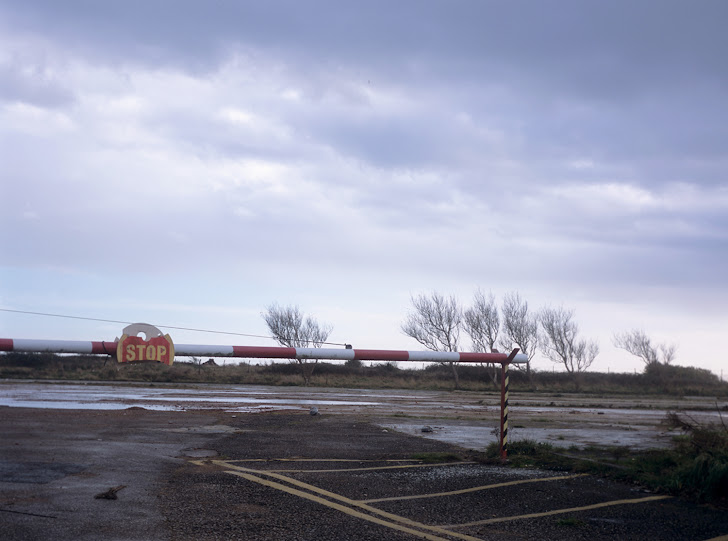
Locked gates

Locked gates

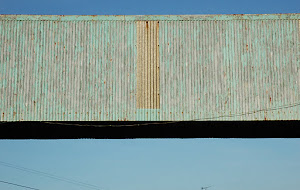
Bridge at Vernon's

Bridge at Vernon's

Percy St, Preston

Percy St, Preston
Once: a social club

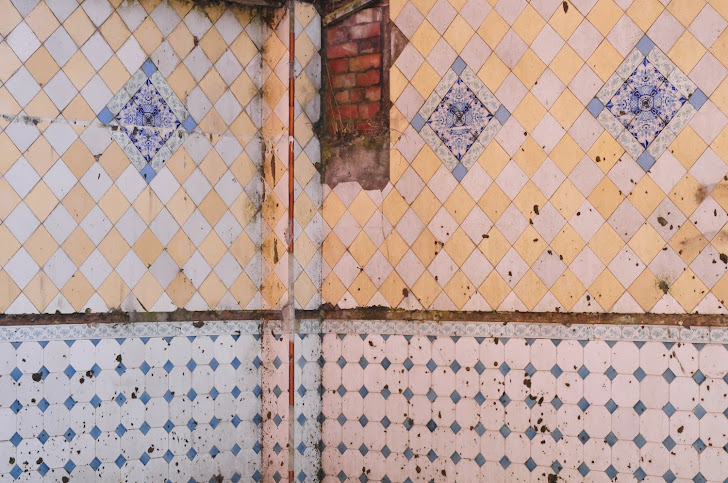
Church St tiled walls

Church St tiled walls

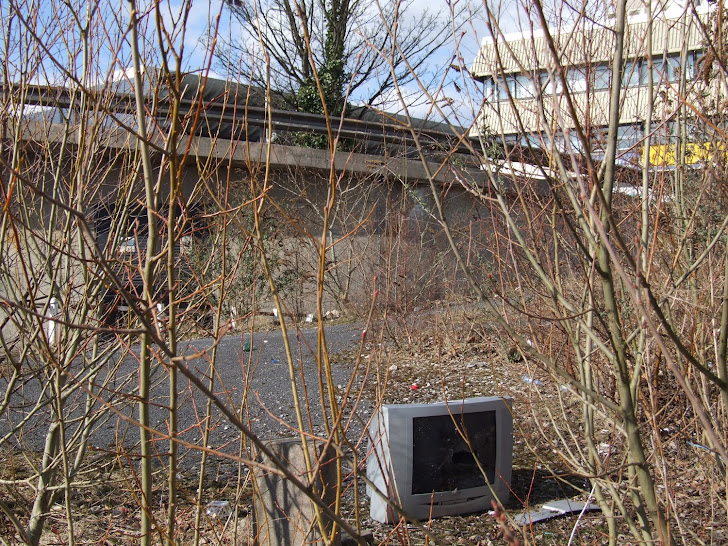
Wasteland

Wasteland