Wednesday, 5 February 2020

Avenham. A full circle.


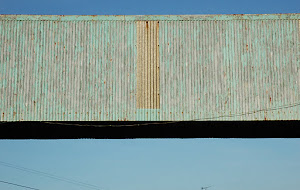
This weathered sign once sat on the colonnade in Avenham, Preston near the famous Victorian parks that hug the beautiful River Ribble.

The surface had become a living organism, infecting the map of local history and obscuring the layout. Where there had been the order of paths and borders there was now algae. The texture and the nature of that layer could almost be 'de-mapping'. 

Years later my wife and I are back in the area. There are many hidden histories and traces of stories. Even with half bits of information, they're stories worth discovering to re-tell. Someone told me the colonnade is supposed to be the only Victorian colonnade of its kind in the country. This probably means 'with trees' because there's an arched one with columns in Llandudno. 

The Avenham sign is long gone, taken by the Council. Over time my own views and practices within photography have developed and changed. Like the idea of the sign; without 'the other' layer it is just a sign, a regular map pointing out an area we are to explore. But the surface that now obscures it has awakened a different aesthetic. 


'Belvedere'. This on the website marginalimages.com

The original photograph features three images:


The postcards were in an encased notice board on the north-side entry to Avenham Park and they featured the belvedere in Avenham park and the main avenue in the adjacent Millar Park. 

Prints are available to buy and range from £12.
Other images can be bought on my Etsy page


Monday, 26 May 2014

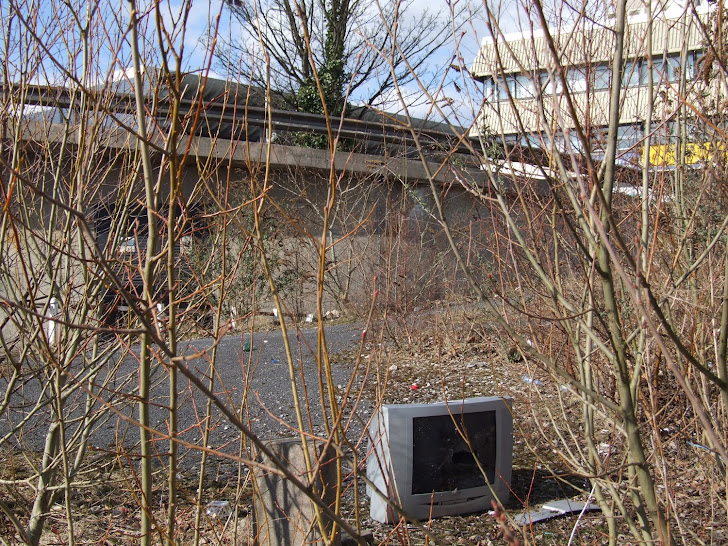
This is a large site between Avenham Lane and Church St in Preston. It's a significant area due to the amount of open spaces that can be spotted within a mile radius. Church St and its environs are at the heart of a project I focussed on for my MA studies. This particular site once belonged to EH Booths and then was put aside after demolition and ultimately neglect. Plans being plans take forever especially when existing businesses are involved.


The changes that are due are taking their time since the developers and interested parties involved want to close small local shops in order to 'fill gaps' (ie, the grotty wastelands and small businesses that hinder progress in favour for the proposed supermarket - that will need the entire area to develop a flow towards its own centre).  Since looking at the project in 2010 the complicated case continues to today (May 2014). I interviewed small businesses in the area and they all said the same thing. The Council developers had 'no idea', they wanted leading developers to take over and they also wanted the area completely changed to favour larger developers, instead of including existing shops: basically they wanted to capitalise on the whole zone rather than modify a working community where regeneration was desperately needed. The near by iconic bus station was also connected to these plans. they were going to demolish that, move it elsewhere and dissolve the current routes etc, but that plan dissolved - that's when the Council got in flap and fluster...

Once the enormous John Lewis pulled out of the doomed 'Tithebarn Project', the major sponsors basically said to leading Councillors 'you don't really know what you want do you - I'm out'.

The new plan supermarket WILL be built. But at the moment this ghostland continues to be...


 The view now taken slightly further back on Fylde Rd                                                                         (uploaded 2024)
  

Same spot taken May 2014. Colour, vibrancy and 
wilderness is often a welcome sign!


Fylde Rd, Preston. Wasteland for many years.
this image was taken 2010/11.


Thursday, 14 February 2013

Glovers Court - updated 2020.

Glover's Court Preston...


This space was the yard joining the Lambert Brother's Printing company (closed for many years) and by spring a welcome splash of colour. Nature comes back but it wasn't going to be long: heads it's flats / tails, a car park - boom!


Not far away from here are many uncertain spaces on and around Church Street and close to Preston Bus Station. Upon first writing this the famous Brutalist structure was under discussion and for most admirers it was a jaw dropping shock what the council and developers had in mind. On the plus side the Tithebarn Project was doomed when John Lewis pulled out and since then the megalithic building has attained a Grade II listing from English Heritage - it's been tarted up and has had the 'aprons' pedestrianised. Writing this in 2020, I think they've done a great job.


Wednesday, 1 February 2012

CHURCH STREET 2012
CHURCH STREET c.1990s

A look down Church Street, Preston

Sometimes you have to work from memory alone. From what I remember of Church St in Preston in the early 1980s was that it was very run down. There was a second hand music shop (which I bought a bass guitar from to start a punk band!); a pet shop (when this closed down in '83, the Youth Opportunity Programme - YOPs, which included myself, took 2-3wks painting it.) There was a closed down Iron & Wire cutters merchants (built in 1851) that still stands today and features in some of the photographs that involve these neglected spaces.

Action Records record shop (still there today) moved into the area in 1980-81, there were hotels, 4 pubs, a coin collector, Frank Clarke's army and navy surplus store, a very old church, several jewellers...It was very low key, not funky or arty, it was a very working corner of town. The flaking paint, the sooted brick and the broken glass were real enough.

In terms of today 'regeneration' is a redundant term for areas like this. It means nothing. Awkward spatial problems like Church Street will not be solved by a clear and sudden flow of capital. Growth isn't just a term that should reflect financial gain. This part of town/city is a serious reminder that what's needed is something much more organic and cultural, it should be nurtured and supported with commitment. The Northern Quarter in Manchester is a prime example.

Several buildings had been left to fall into disrepair so that eventually they were condemned and demolished. The Real McCoy was a 'burger bar' for post clubbers in the 80/90s. When it closed it was left to rot. Twenty years later a new block of generic and faceless quick-builds that are swooping the inner city networks, was thrown up. A clean and shining start to the millennium. It became the new city PAD (Preston Art & Design) gallery...a hub for artists and crafts people in the heart of the 'regeneration'. It served the creative community well. The idea to locate it next door to where I bought a bass guitar, which I'd completely forgotten about, was a strange joy. Unfortunately, this new project funded by the Council only lasted 3-4 years; it moved to an old post office building in the city centre...and very quickly died. The fact that it closed down in the centre is sad in itself. It feels as though that area of Church Street is sealed off from any kind of plans -  an area that is desperately needed for something better.


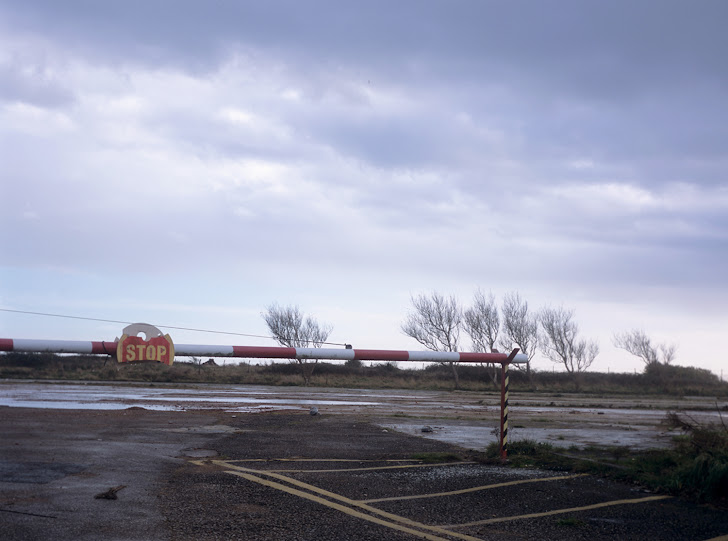
Locked gates

Locked gates

Bridge at Vernon's

Bridge at Vernon's

Percy St, Preston

Percy St, Preston
Once: a social club

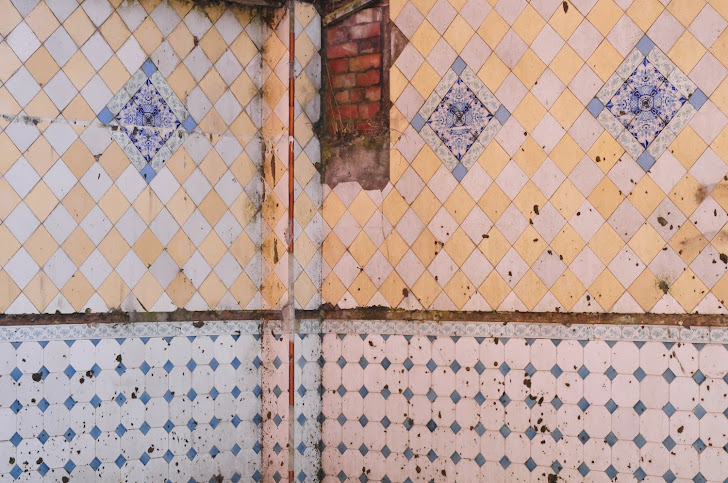
Church St tiled walls

Church St tiled walls

Wasteland

Wasteland