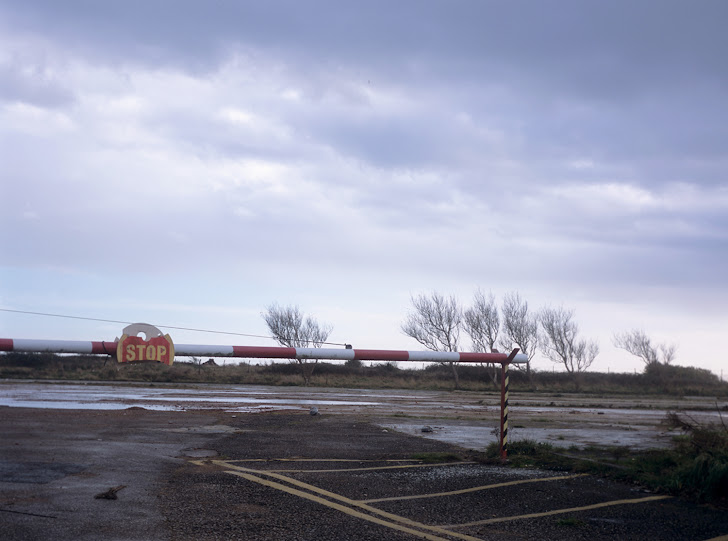
Friday, 17 April 2026

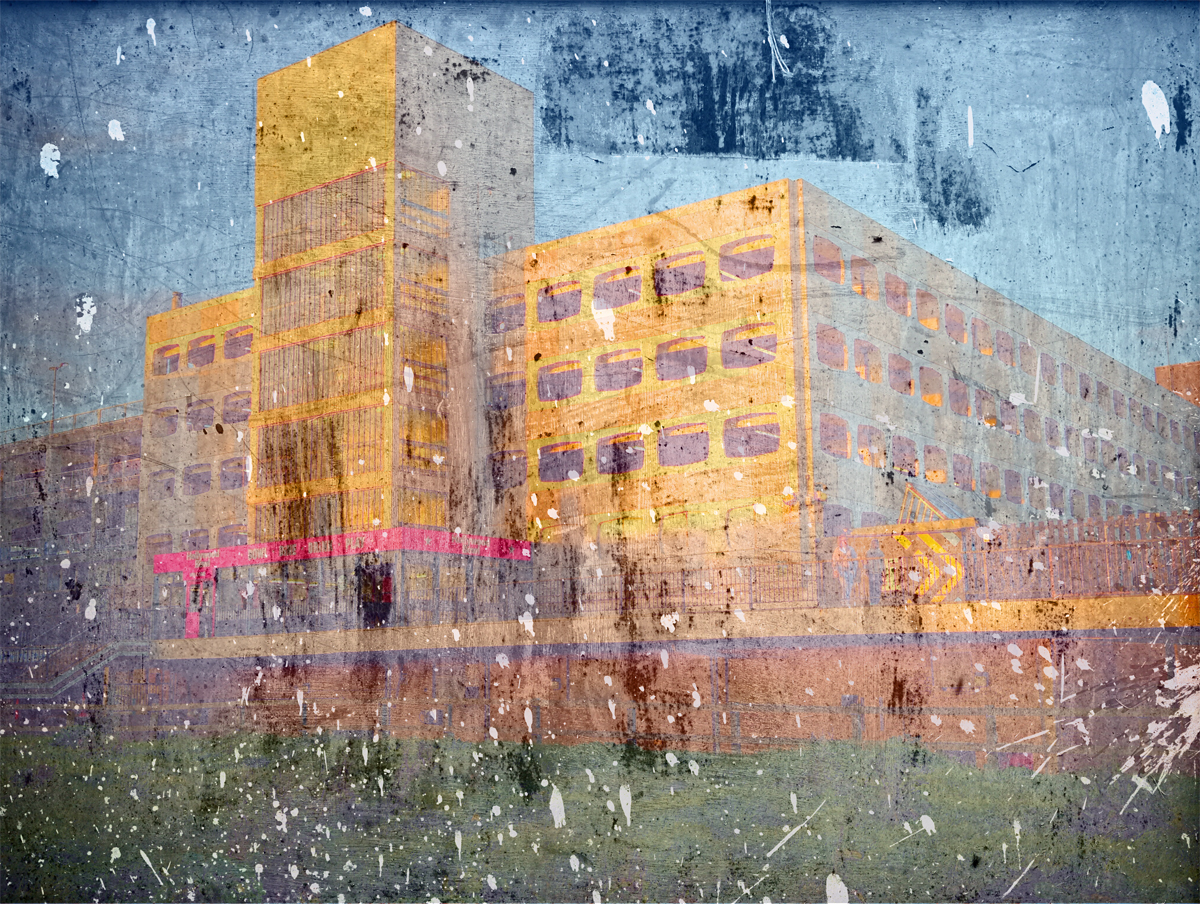
Mill Hill flats, Blackburn, 2001, (demolished).

In the 1980s I wandered without any knowledge of history or photography...I just liked uncertain old buildings, flaking paint and wandering.

Forty odd years later - editing and sifting through negs and photos some of the buildings are no longer here. I took one photo (in 2001) of 'three high rise' flats from a moving train, but for years I hadn't a clue where it was. 

In 2026 I joined Blackburn Past & Present Facebook page and queried the image - lots of people replied. It turned out to be 'Mill Hill' flats. A few months after the photo was taken the flats were demolished - with the help of locals it took me twenty five years to find that out!

I use a lot of b/w 35mm/120 roll films to repurpose / create layered images - I like the idea of an image for a different aesthetic - like adding a texture and giving it another perspective. 


Mill Hill Flats, Blackburn 2001/2025


Tuesday, 17 September 2024

Shap, Worthing & Preston

                                             Tata Steel Co., Shap, Cumbria.


During a trip to the Lake district from Lancaster, we passed through Shap on the A6. From this high point near Fell Garage (now a motorhome hire service), you can see the fell that is High Street to the left. On the opposite side of the a road, slammed between the road and the motorway is a steaming factory belonging to Tata Steel company, at first at odds with the rural vibe but captivating none-the-less. 

The final image is of a photo merged/layered with an textured image, to give the illusion that it's an old image. This simple approach is part of a side project called Marginal images. All of these photographs are carefully edited and selected to keep within a collection that have been exhibited locally and put up for sale.


                     Hollywood Bowl, Worthing, W. Sussex


In a three year period my wife had researched the best conversion units to fit our Citreon Berlingo to begin our road trips around the UK's coast. It was dreamed up and planned long  b before we set off. We picked up the unit near Eastbourne on the south coast, stayed in Worthing for the night at a Travel Lodge. Our hunt for a chippy tea at sunset drew my attention to the brutal-esque ex-car park building that is the 'Hollywood Bowl', a stark, 60s throwback that's now a bowling alley. The overlay is a detail from the blue paint spattered gate, found on a trip through Greece.


                   Avenham Lane high rises, Preston, Lancs


Avenham in Preston was home for many years and I was constantly taking photographs there. These flats feature many times in the Marginal images set. They are taken from different perspectives but look like they could be anywhere. For this image I added the flaking surface of a concrete bridge, taken in New York. 


Monday, 26 August 2024

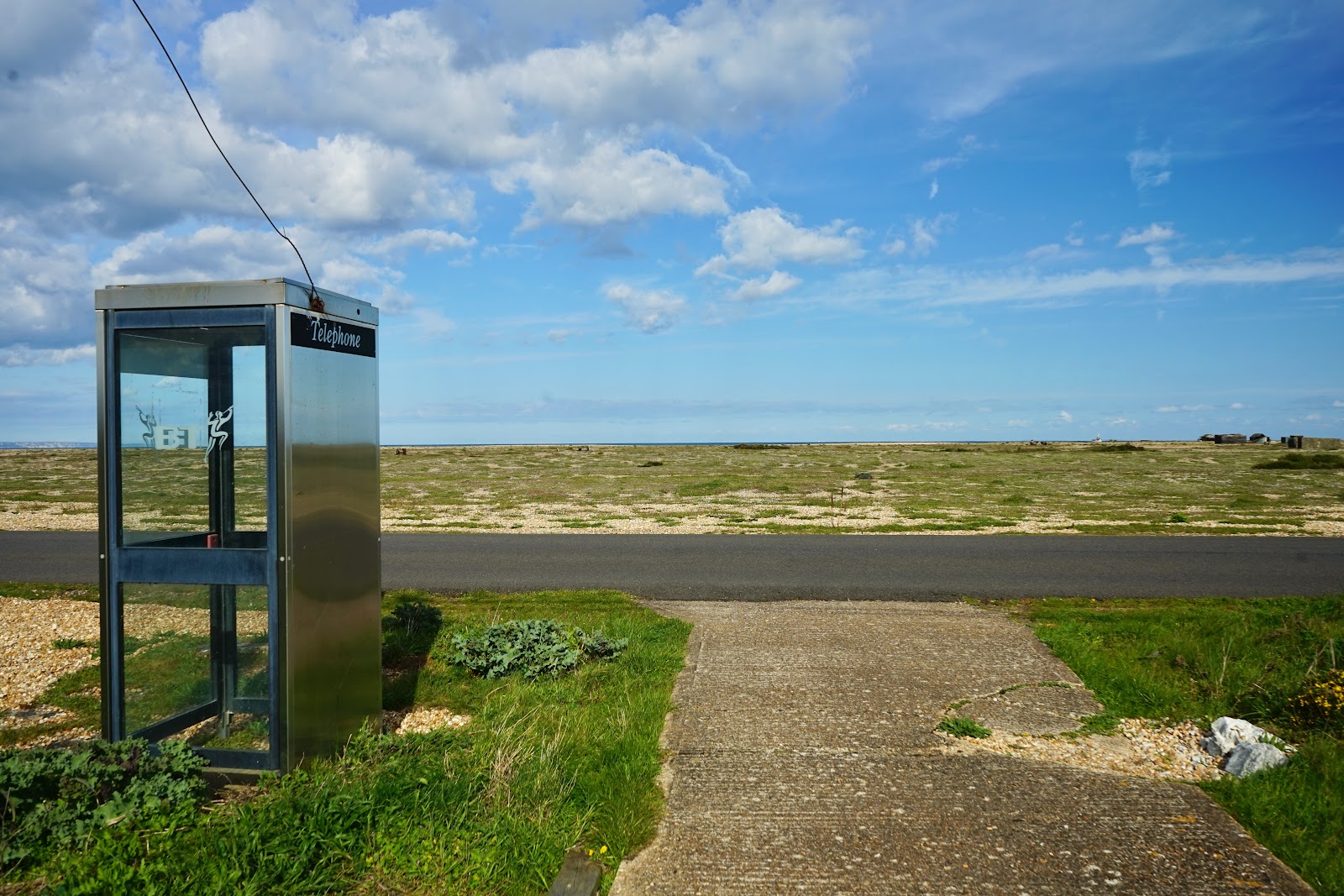
Dungeness, Kent.

Dungeness is a flat, eerie and wild edgeland nestled at the tip of southern Kent.


Through a camera you can frame a jumble of pylons, low buildings, a lighthouse and a power station. Small innocuous homes sit like compact, self sufficient huts out of season.

One of the few black cottages has thick yellow window frames and a borderless garden belonging to the artist and film maker Derek Jarmen, now kept and overseen by his partner. 

The shingle merges with the garden, without a border to speak of. The garden and the landscape beyond it casts a spell which was difficult to articulate, something about it being both bleak and beautiful. How do plants and animals survive at the edge of this otherworldly lunar-esque dimension? The wilderness of the place helped it become an SSSI, a site of special scientific interest. The only boundaries seem to be the few roads.

At the time of our visit I got out the car and marvelled at the distant horizon, where large ships could be spotted and in the foreground, weather battered boats lay up on shingle. A large rusted tank rests along with other skeletal detritus. Walking in the distance, a visitor, with their partner trailing behind. 


Nearby Jarman's cottage I stood on a pathway to photograph a defunkt BT booth that seemed at odds within the strange landscape. Crossing back over the road to capture more detail in the low scrub I heard a shout, "S'cuse me!".  I only turned when the bloke's voice came again, this time more gritty and annoyed. 

A man appeared in a wooly bobble hat, arms bellowing like Viz's Biffa Bacon. "S'cuse me! You wouldn't like it if I came and walked all over your garden, would you? No! Well, don't do it on mine! " He huffed and turned quickly off, ignoring my apology. I hadn't been bothered to ask - mainly because it looked like nobody lived there. 


Friday, 3 April 2020

In the Frame #1 Robert Frank

A detour from photographing and writing about spaces in the city.

Years ago I saw the film 'The Pledge', directed by Sean Penn. I wrote (and re-wrote) this as a response to a detail.

In The Frame


Robert Frank’s book ‘The Americans’ appeared in 1958. The observations hinted at a so-called American Dream, or at least, an inverted reality deep within the heart of the country. The photographs dealt with issues of segregation, disillusionment, the dispossessed and culminated in the myth of any dreams. It wasn’t received well, was deemed too negative as a visual account and thus lingered for many years. Of course, that changed over time as more questions arose about photography as an art medium and Frank’s reputation grew among the ranks of his peers until, eventually, he was recognized as one of the greats. 

The cover of the book taken at a parade in New Jersey, 1955, feels eerie. A figure to the left is slightly obscured in the shadow of the room whilst at the next window another figure tries to see out past the wind-blown stars and stripes. It’s an image that stays because of its ambiguities. The American flag dominates the frame and the people it represents are immersed in shadow or completely blanked.


It implies a darker or a foreboding psyche behind a country that prides itself with freedoms and opportunity. It hints that things are not what they seem. When you consider the passion from Americans regarding their constitution and all that their flag stands for, it becomes a much more powerful image, not just because that some people are shrouded in some kind of secrecy or mystery, but that there are other more powerful people who control that narrative. Sean Penn chose to recreate it within a parade scene in his directorial crime mystery ‘The Pledge’ from 2001, starring Jack Nicholson. 


A flash of the image appears as we follow our detective into the crowds as the height of the film’s atmosphere intensifies. It’s brilliantly placed as it feels like it fits the film’s pace. Was Penn’s intention to rework the imagery into the film to provoke, or evoke something, or is it simply a homage to the great photographer? It’s possible that it’s all these points. What’s certain is that it’s a reminder of the power of visual imagery and for almost 20 years after the film was released, that particular image continues to ask questions about who the Americans were, who they are now, and what they really want to be. 


Thursday, 13 February 2020

Changed Space. APRIL 2020

Preston centre in particular seems to be evolving fast as spaces are changing. On Pitt Street the six terrace houses that looked out of place, surrounded by car parks, have now vanished and have been replaced with...er, a car park. This area is now one giant car park mainly serving the Lancashire County Council and Records offices. It's part of the criteria now, because everyone drives, to create space for cars. Over twenty years following this changing urban landscape, the new spaces created are likely to be - or already are:

a) a car park
b) student accommodation or luxurious/professional accommodations 
c) generic new offices (to let)
d) umm...a car park


Change has also arrived at Vernon's Lodge; a fishing pit, central to the land that merges with Penwortham and Lostock Hall. To this day, there's the mystery of rusted green pipework that sits above a concrete platform with an opening facing the fishing pit. Something existed before, but what?


The other surrounding space has been a combination of 'edgeland', marginal-brown field and green belt for many years. It was this latest visit that things were different.


I heard the diggers first and could make out a high wall, obscuring a mound of red rubble. Everything behind had been flattened. The factory was no more. It had been an idea today to investigate again, to see into that place as I only had photographs from the outside. A dog walker told me they were preparing it for flats and the workers were redirecting the flow from the fishing pit as a 'feature'.

"About time, the factory's been closed fifteen year and they only knocked it down twelve month ago. I'm just waiting for the right pay out. We should get that and another house." He lived behind a row of houses which are to be part of the redevelopment. The houses on Sunny Bank, right next to where the factory was are still there. "Oh yeah, people are still living in them. They be waiting as well, till the time is right."

Wednesday, 5 February 2020

Avenham. A full circle.


This weathered sign once sat on the colonnade in Avenham, Preston near the famous Victorian parks that hug the beautiful River Ribble.

The surface had become a living organism, infecting the map of local history and obscuring the layout. Where there had been the order of paths and borders there was now algae. The texture and the nature of that layer could almost be 'de-mapping'. 

Years later my wife and I are back in the area. There are many hidden histories and traces of stories. Even with half bits of information, they're stories worth discovering to re-tell. Someone told me the colonnade is supposed to be the only Victorian colonnade of its kind in the country. This probably means 'with trees' because there's an arched one with columns in Llandudno. 

The Avenham sign is long gone, taken by the Council. Over time my own views and practices within photography have developed and changed. Like the idea of the sign; without 'the other' layer it is just a sign, a regular map pointing out an area we are to explore. But the surface that now obscures it has awakened a different aesthetic. 


'Belvedere'. This on the website marginalimages.com

The original photograph features three images:


The postcards were in an encased notice board on the north-side entry to Avenham Park and they featured the belvedere in Avenham park and the main avenue in the adjacent Millar Park. 

Prints are available to buy and range from £12.
Other images can be bought on my Etsy page


Monday, 26 May 2014

This is a large site between Avenham Lane and Church St in Preston. It's a significant area due to the amount of open spaces that can be spotted within a mile radius. Church St and its environs are at the heart of a project I focussed on for my MA studies. This particular site once belonged to EH Booths and then was put aside after demolition and ultimately neglect. Plans being plans take forever especially when existing businesses are involved.


The changes that are due are taking their time since the developers and interested parties involved want to close small local shops in order to 'fill gaps' (ie, the grotty wastelands and small businesses that hinder progress in favour for the proposed supermarket - that will need the entire area to develop a flow towards its own centre).  Since looking at the project in 2010 the complicated case continues to today (May 2014). I interviewed small businesses in the area and they all said the same thing. The Council developers had 'no idea', they wanted leading developers to take over and they also wanted the area completely changed to favour larger developers, instead of including existing shops: basically they wanted to capitalise on the whole zone rather than modify a working community where regeneration was desperately needed. The near by iconic bus station was also connected to these plans. they were going to demolish that, move it elsewhere and dissolve the current routes etc, but that plan dissolved - that's when the Council got in flap and fluster...

Once the enormous John Lewis pulled out of the doomed 'Tithebarn Project', the major sponsors basically said to leading Councillors 'you don't really know what you want do you - I'm out'.

The new plan supermarket WILL be built. But at the moment this ghostland continues to be...


 The view now taken slightly further back on Fylde Rd                                                                         (uploaded 2024)
  

Same spot taken May 2014. Colour, vibrancy and 
wilderness is often a welcome sign!


Fylde Rd, Preston. Wasteland for many years.
this image was taken 2010/11.


Thursday, 14 February 2013

Glovers Court - updated 2020.

Glover's Court Preston...


This space was the yard joining the Lambert Brother's Printing company (closed for many years) and by spring a welcome splash of colour. Nature comes back but it wasn't going to be long: heads it's flats / tails, a car park - boom!


Not far away from here are many uncertain spaces on and around Church Street and close to Preston Bus Station. Upon first writing this the famous Brutalist structure was under discussion and for most admirers it was a jaw dropping shock what the council and developers had in mind. On the plus side the Tithebarn Project was doomed when John Lewis pulled out and since then the megalithic building has attained a Grade II listing from English Heritage - it's been tarted up and has had the 'aprons' pedestrianised. Writing this in 2020, I think they've done a great job.


Wednesday, 1 February 2012

CHURCH STREET 2012
CHURCH STREET c.1990s

A look down Church Street, Preston

Sometimes you have to work from memory alone. From what I remember of Church St in Preston in the early 1980s was that it was very run down. There was a second hand music shop (which I bought a bass guitar from to start a punk band!); a pet shop (when this closed down in '83, the Youth Opportunity Programme - YOPs, which included myself, took 2-3wks painting it.) There was a closed down Iron & Wire cutters merchants (built in 1851) that still stands today and features in some of the photographs that involve these neglected spaces.

Action Records record shop (still there today) moved into the area in 1980-81, there were hotels, 4 pubs, a coin collector, Frank Clarke's army and navy surplus store, a very old church, several jewellers...It was very low key, not funky or arty, it was a very working corner of town. The flaking paint, the sooted brick and the broken glass were real enough.

In terms of today 'regeneration' is a redundant term for areas like this. It means nothing. Awkward spatial problems like Church Street will not be solved by a clear and sudden flow of capital. Growth isn't just a term that should reflect financial gain. This part of town/city is a serious reminder that what's needed is something much more organic and cultural, it should be nurtured and supported with commitment. The Northern Quarter in Manchester is a prime example.

Several buildings had been left to fall into disrepair so that eventually they were condemned and demolished. The Real McCoy was a 'burger bar' for post clubbers in the 80/90s. When it closed it was left to rot. Twenty years later a new block of generic and faceless quick-builds that are swooping the inner city networks, was thrown up. A clean and shining start to the millennium. It became the new city PAD (Preston Art & Design) gallery...a hub for artists and crafts people in the heart of the 'regeneration'. It served the creative community well. The idea to locate it next door to where I bought a bass guitar, which I'd completely forgotten about, was a strange joy. Unfortunately, this new project funded by the Council only lasted 3-4 years; it moved to an old post office building in the city centre...and very quickly died. The fact that it closed down in the centre is sad in itself. It feels as though that area of Church Street is sealed off from any kind of plans -  an area that is desperately needed for something better.


Thursday, 5 January 2012

A hybrid liminal space

An usual space:

Hardwick Place was once a street just off Garstang Road, Preston, near the bus station. Left for many years it has become something of a hybrid of liminal and adopted free space. It was quietly managed by locals who have put a few plants in near to their back yards. Bollards still line up and a sign throws a dated warning. 


The image reminds me of a 'garden centre' in the centre of Manchester (no longer!). An unlikely location, but something about it is reminiscent of Eugene Atget's Zone in Paris. Although both images conduct slightly separate issues about the paradigms of space they are collectively inhabiting the same debates of dilemmas that are cohesive to the arguments.


Thursday, 15 December 2011

These receding spaces

What to do with disused space is a daily task local authorities ask. Developers would normally move in or fees could be quickly reaped from the quick-fire solution of a car park. Space can be used and does get used in an independent manner. Art squatters, performers and people at play have long been documented. Guerilla gardening is creeping in, orderly though it may seem is closely related to us wanting nature to reclaim unwanted spaces.

Whatever it may be it puts its mark back into the urban swirl of change and domineering zones of commerce. There is a growing trend of not-so-much nostalgia but of the need for something that summons a past, a story, a history...something that shows us that something has gone but not forgotten. Ironically it is some of the spaces with traces of before lives that is just about left. We see the beauty in derelict things and we are able to reflect or meditate, for now at least.

The zones of our cities are new, calculated, clinical and carefully mapped for instruction so that space recedes and all pasts with it too...

Thursday, 8 December 2011

Wastelands pose questions about what Manuel Castells calls space of flows; the internal city rhythm of commodity, high finance, technology, communication, distribution and production...The wasteland is a closed zone to this capitalistic generated network.

New things can begin from nothing but in this way a neglected, forgotten or disused space can turn off any impending investor/developer, especially if an area in need of regeneration is stretched over a long period. Unblessed towns without the fast track of elusive investors slip back in times of recession to their former rugged selves. Some authorities in Lancashire such as those in Preston have been holding on to the dream of investment from major companies but are tied until it happens. In an area closely overlooked by the city's impressive brutalist structure that is the bus station, is a block of varying wastelands. Some have laid waiting since the recession of the 1990s. And new pockets are opening up.

Friday, 18 November 2011

Between, Marginal but not Beneath

Writing on the works of Victor Turner in What is Liminality? Charles La Shure* drives toward people and hierarchal forms in society, by saying, "...in spatial terms, they are in between (liminality), on the edges (marginality), and beneath (inferiority)." 
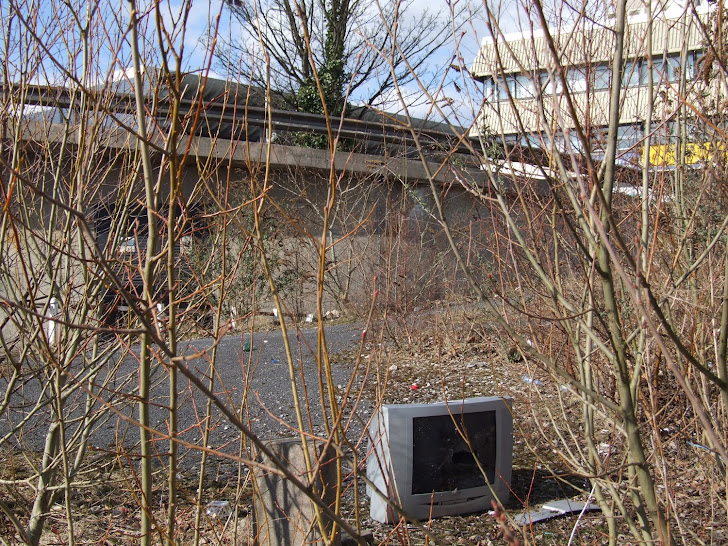
The same could be said of these city-spaces except I would be prompted to mention that with will of community and legal procedure, liminal city spaces can be 'managed' and therefore be removed from the eyesore category and evolved into an alternative spaces that doesn't require much in the way of financial and time input to recreate a 'free space'.

www.liminality.org/about/whatisliminality/*

Oct 2005.*

Thursday, 17 November 2011

Dilemmas of space

The spaces that have laid so long echo that ghostly voice of a changed landscape; the problems of industry and investment. The spaces left go on like uncertain pauses and unanswered questions.

Since the mid-1990s Manchester has developed itself as a very strong cultural centre and with its spirit has bounced back into the Northern arena as being an important city as any classy European one with much investment, new industries and strong bonds with corporations and business capital.

Smaller, peripheral towns and cities, like Preston don't have the same clout or force and its for these reasons the challenge of interest and potential investment is less on a relative scale.
Church Street in the city's heart has a list of wastelands and scarred spaces.
There tend to various stages of wasteland. The first I'd consider as 'vacant land' where it is both obviously available for development but also open to interpretation. Whether the idea of entering a site is deemed as trespassing or not it is certain that youths and some younger children will want to explore. Usually the land has remained fenced off for some time. Problems arise from time scales. The next stage tends to be the 'liminal stage' where it feels neither owned nor remembered. Other activity can happen. People pass through, walk their dog, motorbikes get dumped, kids play. It becomes an 'other' space.

In Preston, Lancashire, one site (below) is part of an area that requires regeneration. It was once a Booths depot but has since laid open, although it is one of those rare ones in this case that is awaiting development. Once an area needs regeneration it is difficult to develop interest. Meanwhile, nature returns. 


Monday, 14 November 2011

'Friendship' Social Club, Percy Street

This space was once a social club. This photo was taken on Fujifinepix around 2004.


They tore the building down and it's been a wasteland since (2020). There's a worn path that runs through. These inner city spaces have a different reasons to attract different kinds of people. The spaces can serve as simple short cuts while for others it can be a place to hide things or with less emphasis on discretionary acts, leaving huge TV sets.


The space has been in this state for many years since the club was sold, but what of the land?

Sunday, 13 November 2011

Deepdale St, now a car park


A view through the fencing on Deepdale St. Deepdale football ground is just visible.

Locked gates

Locked gates

Bridge at Vernon's

Bridge at Vernon's

Percy St, Preston

Percy St, Preston
Once: a social club

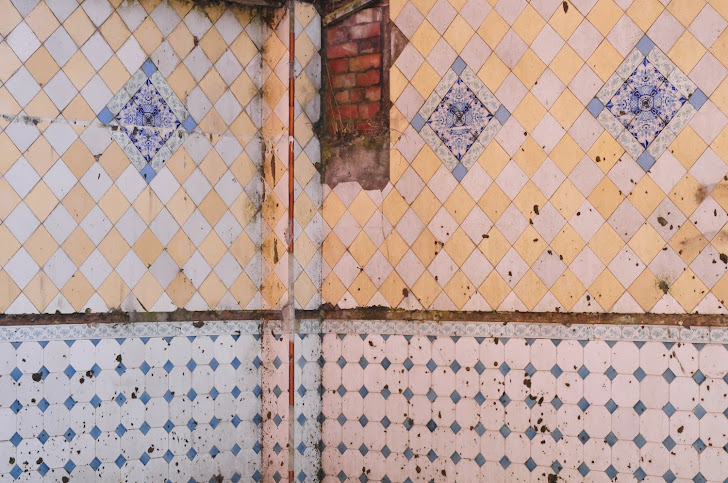
Church St tiled walls

Church St tiled walls

Wasteland

Wasteland